
Material by the Agency for Legislative Initiatives for Dzerkalo Tyzhnia.
The year 2025 brought Ukraine certain progress in reforming the justice sector.
The Service of Disciplinary Inspectors of the High Council of Justice (HCJ) became fully operational.
The High Qualification Commission of Judges (HQCJ) completed a number of competitive selection procedures, as a result of which, for the first time in 12 years, new judges appeared in some courts of appeal. However, not all of them have taken the oath and begun administering justice due to delays on the part of the President.
At the same time, Volodymyr Zelenskyy appointed two new judges of the Constitutional Court (CCU), thereby unblocking its work after a six-month suspension, as well as two members of the HCJ, which in turn appointed another member of the HQCJ, thus completing its composition.
At first glance, it may seem that everything is finally moving in the right direction, albeit not as quickly as everyone would wish.
Unfortunately, far from everything. And here is why.
A Strategy That Does Not Exist
For the third consecutive year, Ukraine has lacked a comprehensive Strategy for the Reform and Development of the Justice Sector, although its draft has long been prepared by the Office of the President (Office, OP). However, despite the declared importance of this document, the President’s signature had still not appeared on it in 2025.
Political actors pretend that this is acceptable: allegedly, what matters is not the signature but implementation. Moreover, the most important provisions are said to be reflected in the Rule of Law Roadmap adopted by the Government, which records Ukraine’s European integration commitments in this area.
This is both true and not true at the same time. One cannot implement a document that does not exist, even if certain elements of the reform are moving in the right direction. At the same time, there is nothing to reproach the team of the Deputy Head of the Office of the President, Iryna Mudra, or the Head of the Verkhovna Rada Committee on Legal Policy, Denys Maslov — a candidate for the position of Minister of Justice — in this matter. Before the President signs documents within ‘his vertical’, they must bear not only the signature of the concerned deputy (Mudra) but also that of the Head of the Office of the President.
After ‘Mindichgate’, it is entirely understandable why the previous Head of the Office had little time for judicial strategies (although he has recently had his right to practise as a lawyer restored). All hopes now rest with the current Head of the OP, Kyrylo Budanov, who may be far removed from judicial specifics but certainly understands the importance of strategic planning better than the ‘lawyer’ Yermak.
The key judicial institutions — the HCJ, the HQCJ and the Supreme Court — also lack their own strategies. Consequently, even the proper performance of their functions (which is far from always the case) does not lead to substantial — and, crucially, irreversible — positive change. For example, the absence of a strategy within the HQCJ has resulted in the non-priority filling of vacancies in commercial courts of appeal (where, moreover, a crowd of relatives and friends of certain members of the HQCJ and HCJ, and even two sitting members of the High Council of Justice, rushed to apply — something unacceptable in countries with established democracies). Meanwhile, in the courts of appeal of large cities such as Odesa and Dnipro, there is simply no one to work. Although they are expected to receive judges in 2026, this will be one to one and a half years later than it should have been.
The absence of a strategic vision for the development of the Supreme Court (SC) within its Plenum has already led to a personnel crisis during the election of the leadership of the cassation courts. The Civil Cassation Court elected its Head only on the sixth attempt — Maryna Chervynska, who became a compromise figure after five unsuccessful rounds of voting. Meanwhile, the Administrative Cassation Court within the Supreme Court (ACC SC) elected Ihor Dashutin as its Head by the minimum number of votes required — a judge who has been the subject of journalistic investigations concerning alleged illicit enrichment. Such a choice is unacceptable, particularly for a court that examines cases against the President and Parliament. It is difficult to explain to international partners why, in a country that seeks to become a member of the EU as swiftly as possible, judges with questionable reputations continue to be elected to senior judicial positions. And all this takes place against the background of the Kniazev case, the DACK and other scandals.
There has also been a change in the Secretary of the Grand Chamber of the Supreme Court (GC SC): on 13 January, the judges of the GC SC elected the civil law specialist Serhii Pohribnyi to this position. He is regarded as an ideological academic ally of the current Head of Parliament, Ruslan Stefanchuk. It should be recalled that it was precisely thanks to Stefanchuk and a cohort of civil law scholars loyal to him that, in 2025, the Commercial Code of Ukraine (CCU), which had been in force since 2004, was finally repealed. What consequences this will have remains to be seen over the coming years. However, many judges and academics warned against taking such steps during wartime, proposing that a calmer period be chosen for major transformations.
However, the greatest problem of the GC SC lies in the judges of the former Supreme Court of Ukraine who entered the current composition of the SC by circumventing the 2017 reform. Due to complex legislative casuistry and with the support of former colleagues from the Constitutional Court, several judges were transferred to the Supreme Court at the beginning of 2024. Now sitting within the Grand Chamber, they are reinstating old case law and openly lobbying the interests of the old system, blocking further judicial reform and European integration, and effectively steering the ‘new’ SC towards yet another reform. Although at the beginning of 2026 the GC SC managed — by a majority of one vote and after one and a half years of chaos — to return to the agenda one of the previously repealed elements of judicial reform, the Kryvenda–Yemets tandem, according to sources within the SC, is already preparing further attacks on decisions of the HCJ and the HQCJ concerning the dismissal of judges lacking integrity. The remaining judges of the Grand Chamber would therefore do well to reflect carefully on the kind of country in which they — and their children — wish to live: a country of ‘kniazevs-and-vovks’ or one governed by the rule of law.
A Strategy Exists, but There Is No Result
In 2025, the High Anti-Corruption Court (HACC) and the National School of Judges of Ukraine adopted their own Strategies. This was certainly timely.
The HACC has faced considerable criticism for the excessive length of its proceedings. The Nasirov case remained pending at first instance for six years, effectively creating an opportunity to avoid punishment, as the limitation period for holding Nasirov liable will expire in April 2026. It is highly unlikely that the appellate court will manage to complete its examination within that timeframe. Unfortunately, this is not the only high-profile case in which proceedings have moved more slowly than a tortoise.
The HACC is aware that this situation cannot continue. However, time will tell whether the Strategy and the appointment of new judges (who are expected to join the court this year, provided that the next competition to the HACC does not fail) will make a difference.
In October 2025, the prosecution service also adopted its own Strategy for Reform and Development. It largely repeats requirements already contained in other state policy documents — requirements that the prosecution service itself has disregarded, for example by cancelling, in July 2025, the basic competition for positions in higher-level prosecutor’s offices. Is there anything about this in the Strategy? Of course not. This is therefore a case of good intentions leading to a familiar outcome. In the past week, the media and the public have been stirred by news of the formation of a competition commission for selection to senior positions in the Specialised Anti-Corruption Prosecutor’s Office (SAPO). Alongside international experts, the commission includes the appointment of a lawyer Oleksii Shevchuk.
The issue here is not at all about whose interests he may have represented in the past (the right to defence is constitutional and universal). The problem lies in how Shevchuk’s candidacy is perceived by society and the expert community: when the state seeks to increase trust in the selection of the leadership of the SAPO, this is certainly not achieved by appointing to competition commissions individuals whose reputation and ethical standards raise questions. Moreover, these are direct statutory requirements — ‘impeccable business reputation, high professional and moral qualities, public authority, integrity’. It is regrettable that the Prosecutor General, holding such a high office and extensive powers, either fails to understand this or, even worse, deliberately undermines trust in the competition commission before it has even begun its work. Why, then, does Ukraine spend the time and resources of our international partners (and donors), if the Prosecutor General disregards such fundamental categories as ethics and morality?
The situation within the Bar is no better. It lacks not only a comprehensive development strategy (the previous one expired at the end of 2025), but also re-elected leadership that should have been responsible for drafting such a document. Incidentally, it was precisely the absence of any meaningful positive changes within the Bar that the European Union highlighted in its Enlargement Report published in November. Experts have also drawn attention to this issue year after year in shadow reports.
(Literally during the preparation of this material, the Specialised Anti-Corruption Prosecutor’s Office (SAPO) announced the approval of its Strategy for 2026–2028. Incidentally, the Strategies of SAPO and the HACC were developed with the support of international technical assistance projects.)
Progress That Did Not Materialise
The absence of a comprehensive strategic document and a detailed, realistic consolidated implementation plan has already led to delays in fulfilling several of Ukraine’s international obligations.
Under previously approved plans set out in documents such as the Ukraine Facility Plan and the Memorandum with the IMF, Ukraine was expected in 2025 to fill 25 vacancies at the HACC and to adopt new legislation on judges’ integrity declarations.
In the end, the HACC was reinforced by only two new judges, while the draft laws concerning judges’ integrity declarations (as well as disciplinary liability) received numerous critical comments from the Venice Commission and, as of the end of 2025, had not been adopted by Parliament.
Ukraine did not receive almost €700 million under the Ukraine Facility — a significant amount for a country at war — and by the end of the first quarter must remedy the situation regarding the selection of HACC judges (at least 23 more judges), and by the end of the third quarter — regarding integrity declarations. Only then can the country expect to receive the specified funds.
The chances of meeting these obligations in 2026 are fairly high. In December, the qualification examination in the competition to the HACC and its Appeals Chamber was completed. Seventy-three legal professionals successfully passed it. Next, the HQCJ and the Public Council of International Experts will assess the integrity of the candidates. Those who successfully pass this stage will be included in the ranking and will determine their place of work — either at the HACC court of first instance or its Appeals Chamber.
Next in line is the competition to two higher administrative courts — the Specialised District Administrative Court (SDAC) and the Specialised Administrative Court of Appeal (SACA). Since Parliament took more than a year to adopt the two laws necessary to launch this competition, last year the HQCJ managed only to collect documents from potential candidates. There turned out to be 268 individuals (356 applications, as some candidates applied to both courts).
This is progress that Ukraine has been awaiting for three years: the SDAC and SACA will examine the ‘political’ category of cases previously heard by the DACK, which was dissolved back in December 2022. It is therefore entirely understandable why the political authorities are in no hurry to ensure the swift launch of these courts.
Overall, at the beginning of 2026, 4,794 judges are serving in Ukraine. This is 208 fewer than as of 1 January 2025. In other words, the HCJ and the HQCJ are operating almost at ‘full capacity’, yet the number of judges continues to decline.
There are currently 1,399 vacancies in courts of first instance, 725 in courts of appeal, 80 judges are lacking in the higher specialised courts (competitions to which are ongoing), and 50 judges are lacking in the Supreme Court, where a competition is also forthcoming.
As regards appointments to courts of appeal, some of the newly selected judges (those who came from the Bar and academia) have already been working for one and a half months without having taken the oath. They have been formally enrolled in the staff of the courts, receive remuneration and undergo training, yet they are unable to perform their primary function — administering justice. The dates for their oath-taking have not been publicly announced by the Office of the President. The judges themselves do not know these dates either, although they indicate that it will be ‘not earlier than March’. Thus, we have an interesting situation: Ukraine has reported to the EU that a certain ‘gestalt’ regarding the appointment of judges under new rules (as required by the Ukraine Facility) has been closed, yet the judges have not actually begun to perform their duties.
Unfortunately, this is precisely the endless paradox of judicial reform that we at the Agency for Legislative Initiatives have written about more than once: one step forward, two steps back, or one step forward — and then standing still. This is exactly what is happening, for example, with the Constitutional Court: the President appointed two judges, yet Parliament failed to secure the necessary votes to appoint two others. At the same time, the Advisory Group of Experts has, on top of everything else, failed for the third time in a row to complete the competition under the quota of the Congress of Judges, having been unable for almost two years to identify a single decent candidate. One may, on the one hand, blame the candidates — as some civil society organisations do — or, alternatively, take a critical look at the competition rules and acknowledge that certain requirements are excessive. What exactly should be amended was analysed in detail as early as a year ago, yet the cart remains where it was.
Instead of Conclusions
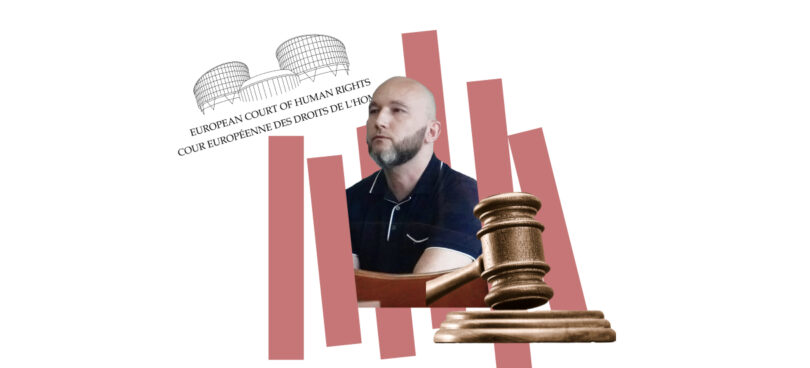
Ukraine is beginning yet another year of judicial reform — a reform that has been ongoing almost since independence. For conscientious judges, this phrase has long provoked nausea rather than inspiration, while those lacking integrity exploit protracted procedures for their own purposes, obtaining judgments in their favour against Ukraine before the European Court of Human Rights (ECtHR).
For example, former judge Tandyr, who fatally struck a National Guard serviceman, received one such judgment last week: namely, that he had been held in detention for an excessive period without the possibility of bail. Yet he himself significantly contributed to the prolonged court proceedings by repeatedly changing his testimony and generally abusing his procedural rights. Unfortunately, this is not the first case in which a judge against whom the Ukrainian justice system has serious concerns receives an opportunity to ‘slip away’ through an ECtHR judgment in his favour. The above-mentioned judges of the former Supreme Court of Ukraine likewise have ECtHR judgments delivered in their favour.
In such stories, the pattern is evident: the absence of clear strategies and a thorough implementation plan, the chaotic conduct of reforms and political decisions that neutralise previous efforts generate legislative inconsistencies. Moreover, poor legislative drafting of draft laws, a long-standing shortage of judges, significant underfunding (the courts are financed at approximately 60% of their needs) and the abuse of rights by judges lacking integrity all contribute to ECtHR judgments against Ukraine. Formally, such judgments may comply with the European Convention on Human Rights, yet in practice they roll back reforms and the years of effort invested by Ukraine.
Is the ECtHR to blame for this? Hardly. Ukraine — consciously or unconsciously — has chosen inconsistency and chaos as the principal drivers of reform in the justice sector and has, for many years, tolerated the absence of honour and dignity in the work of key law enforcement bodies.
When searches are conducted without warrants, beginning at 5 a.m., and people are threatened with walls being broken down. When, during such searches, mothers are not allowed into rooms where their minor children are present and photographs of individuals in their underwear circulate online even before the searches are completed. When photographs of a naked civil society activist are leaked from his seized telephone to Telegram channels and no one is held accountable. When the selection of heads of law enforcement bodies is entrusted to individuals with questionable reputations. When court staff are paid 8,000–10,000 UAH per month for years on end… What kind of European integration can be discussed under such conditions?
If one adds political cases, corruption and the still-existing blue wall of silence among parts of the judiciary and law enforcement bodies, then with such a picture even russians are not needed to undermine our state.
Unfortunately, from the words ‘arbitrariness’ and ‘corruption’ the phrase ‘rule of law’ does not emerge. If we do not begin to bring order to this judicial chaos, the hydra will remain a hydra — no matter how many roadmaps are fed to it.
Author of the material: