Law enforcement reform is an important part of Ukraine’s path towards EU membership and contributes to the shared security of both Ukraine and the European Union. At the same time, this issue cannot be considered outside the context of Ukraine’s current realities and the practical steps needed to implement the required changes.
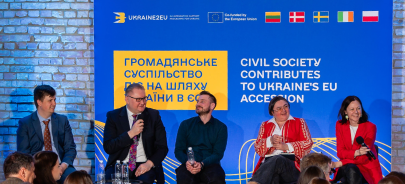
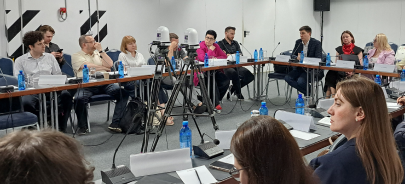
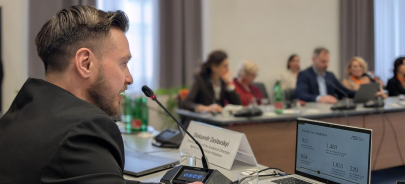
On 29 April, the regional conference ‘Law Enforcement Reform in the Context of Ukraine’s European Integration: Implementation of the Overarching Strategic Plan for Law Enforcement Reform as Part of the Security and Defence Sector of Ukraine for 2023–2027 and the Regional Dimension’ was held in Dnipro.
Participants discussed the priorities and progress in implementing the Overarching Strategic Plan, Ukraine’s progress in meeting EU requirements, the regional dimension of reforms in the context of European integration and the next steps in the reform process. Ukraine is steadily integrating into the European security area, while the Overarching Strategic Plan defines the key areas for transforming the law enforcement system. Particular attention was also paid to the Roadmap on Countering the Illicit Trafficking of Firearms, Ammunition and Explosives.


Deputy Minister of Internal Affairs of Ukraine Oleksii Serhieiev emphasised that the practical implementation of strategic plans should begin with frontline regions, which are critical to the state’s resilience. Among other things, he spoke about building a multi-level security system that involves strengthening the analytical capacity of law enforcement agencies, preventing offences and ensuring close cooperation between law enforcement agencies, public authorities, local self-government bodies and international partners.


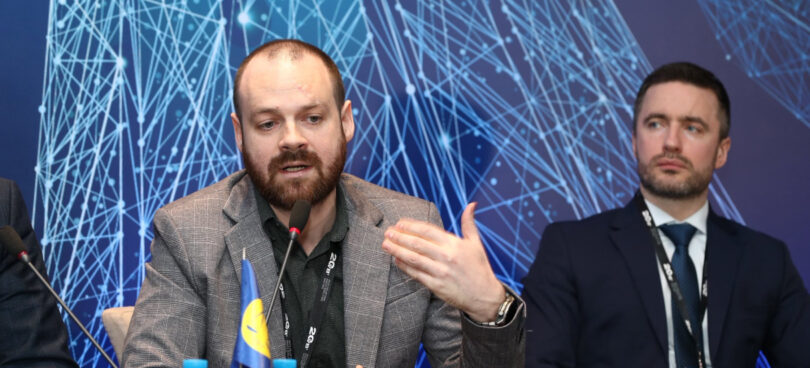
As part of the event, Yevhen Krapyvin, Head of ‘Law and Order’ Area at ALI, together with Olha Kildiushkina, Adviser to the Deputy Prime Minister, held an expert discussion on law enforcement reform in the context of Chapter 24 ‘Justice, Freedom and Security’, focusing on the negotiation process for Ukraine’s accession to the European Union.
Krapyvin noted that ALI continues its systematic work and monitors the implementation of European integration commitments in the field of law enforcement. This includes the Overarching Strategic Plan, which holds an important place among European integration policy documents: its implementation is envisaged under Chapter 24 of the EU acquis, which focuses on building an institutionally capable law enforcement system able to counter serious crime.
This is why discussing the state of law enforcement reform with the leadership of Dnipropetrovsk and Zaporizhzhia regions and ensuring that their views are reflected in national plans is a necessary step towards the European integration of Ukraine’s law enforcement system.


Deputy Prime Minister for European and Euro-Atlantic Integration of Ukraine Taras Kachka emphasised that negotiating Chapter 24 ‘Justice, Freedom and Security’ is one of the most sensitive and demanding parts of the accession process, as it concerns the state’s ability to ensure security, protect citizens and create a predictable environment for business.
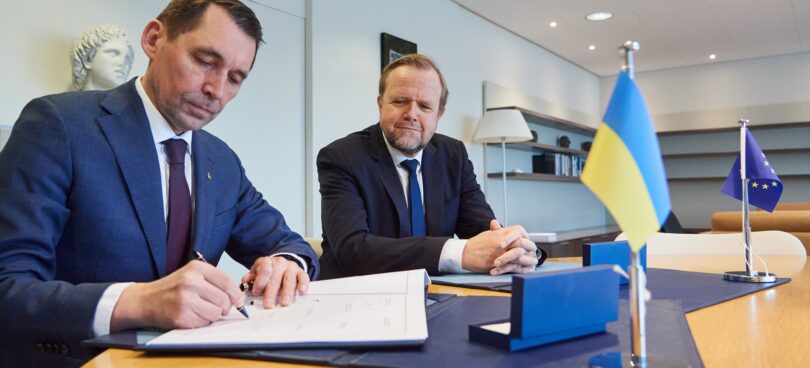
The event was attended by Charlotte Suren, Chargée d’Affaires a.i. of the United Kingdom in Ukraine, Rolf Holmboe, Head of the EU Advisory Mission Ukraine, representatives of the Ministry of Internal Affairs of Ukraine, the National Police of Ukraine, the Security Service of Ukraine, the State Bureau of Investigation, the Economic Security Bureau, higher education institutions, civil society, international organisations, independent experts and participants from Dnipropetrovsk, Zaporizhzhia, Donetsk and Luhansk regions.
The event was organised by the Ministry of Internal Affairs of Ukraine together with the Office of the Deputy Prime Minister for European and Euro-Atlantic Integration of Ukraine as part of the Civilian Security Sector Reform in Ukraine project (CSSR), implemented by Chemonics UK in partnership with Siren Associates, with the support of the Government of the United Kingdom and the EU Advisory Mission Ukraine.