This week marks three years since the President of Ukraine approved the Overarching Strategic Plan for Law Enforcement Reform by Decree No. 273. Has Ukrainian society become safer criminal justice fairer? What is the current state of law enforcement reform?
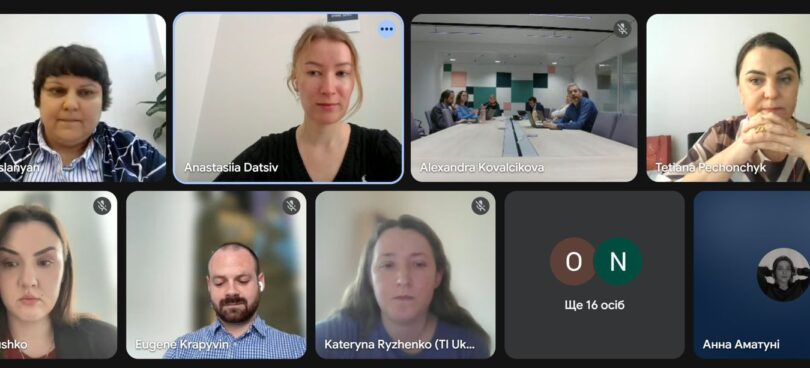
Yevhen Krapyvin, Head of ALI’s ‘Law and Order’ Area, suggests looking at the dynamics of change through the lens of state policy in the field of law enforcement and its strategic objectives. Since the Plan runs until 2027, it is worth taking a ‘helicopter view’ of where Ukraine currently stands, while also taking into account Government Order No. 792-r, which sets out the details of the Plan’s implementation.
What should Ukraine have achieved by the end of 2027, based on the substantive sections of the Overarching Strategic Plan?
1. Effective and Efficient Law Enforcement Agencies and Prosecutor’s Office
The draft law ‘On Law Enforcement Agencies’ is still being developed, and without its adoption it is difficult to speak of unifying these bodies. The problems of military justice also remain unresolved: the draft law ‘On Military Police’, adopted in the first reading in 2024, is clearly insufficient. Approaches to appointing and dismissing heads of law enforcement agencies are being criticised from all sides: either there is no competition, or there is a lack of international experts to conduct competitive procedures. There is still no unified approach to the status, functions and powers of these bodies, taking their specialisation into account.
2. Consistent Criminal Policy
The set of measures on criminal policy as a form of strategic planning in countering crime has not been implemented. The idea itself is popular, but any steps towards its implementation face misunderstanding and resistance. National crime prevention strategies, criminological review of legislative initiatives, reform of criminal statistics and the introduction of crime and victimisation surveys are promising, but for now remain issues discussed mainly within narrow professional circles. Ukraine needs an alternative source of knowledge about crime, rather than relying solely on criminal statistics, which are imperfect by definition and have been distorted by years of manipulation by the relevant agencies.
3. Swift Criminal Proceedings
There is indeed a lack of a comprehensive vision for updating criminal procedure legislation. As of today, amendments to the CPC of Ukraine remain one of the most difficult issues in the entire European integration process. There is an anti-corruption package, controversial amendments concerning abuse of procedural rights or improving the tax compromise mechanism and more fundamental changes such as revising the prosecutor’s discretionary powers in criminal proceedings. The Overarching Strategic Plan covers the latter, but support for these changes from public authorities and professional communities remains minimal.
In the context of forensic examination, there is strong competition between different visions: both the National Anti-Corruption Bureau of Ukraine (NABU) and the State Bureau of Investigation (SBI) have their own ideas. On the other hand, the question is how ready the Ukrainian Parliament is to amend the CPC of Ukraine without destabilising it.
4. Result-Oriented Management System
Most measures under this objective are visible primarily because they concern specific agencies and inter-agency cooperation. There have been some improvements in staffing, internal control, including anti-corruption controls. The SBI is introducing a performance assessment system, but so far the only body where such a system actually works is the NABU. In Yevhen Krapyvin’s view, the Ministry of Internal Affairs of Ukraine is investing the most effort in this area. It is therefore already possible to speak of certain results among the bodies that are part of the MIA system or are coordinated with the Ministry’s involvement.
5. Comprehensive Digital Transformation
At present, the situation appears to fall between the two extremes: either ‘comprehensive transformation, but not digital transformation’ or ‘digital transformation, but not comprehensive transformation’.
In many areas, digitalisation still remains at the level of digitisation, meaning at a basic initial stage. In the anti-corruption field, despite challenges, the eCase electronic criminal proceedings system has gradually become operational for the NABU, SAPO and HACC. By contrast, the introduction of the SMEREKA system for all other law enforcement agencies and the Prosecutor’s Office has only just begun. The system provides for the management of pre-trial investigations across the entire law enforcement system and will be integrated with the Unified Judicial Information and Communication System (UJICS).
6. Openness, Transparency, Accountability and Independence of the Law Enforcement System
Building a fully open, transparent and accountable system under martial law is impossible. However, certain forms of public oversight, such as Public Oversight Councils, continue to operate as a default mechanism. The situation with the Ministry of Defence shows that such councils should function, although it is difficult to assess their results and the role of similar councils under the SBI, the NABU or the ESBU. At the same time, the work of public oversight commissions within the police has been suspended.
The greatest achievement is that, this year, law enforcement agencies have begun preparing higher-quality annual reports. These now follow a narrative format, explaining the state of crime, its dynamics and the contribution of these agencies’ law enforcement work.
Yevhen Krapyvin notes that, as with any public policy cycle in any sector, moving from documents to results requires painstaking daily work.