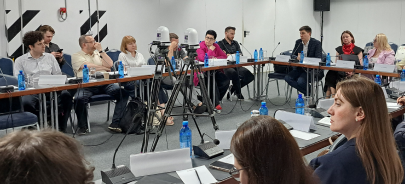
The Agency for Legislative Initiatives (ALI), together with a coalition of civil society organisations, has presented the European Commission with the interim findings of this year’s Shadow Report under Chapter 23 ‘Judiciary and Fundamental Rights’ and Chapter 24 ‘Justice, Freedom and Security’.
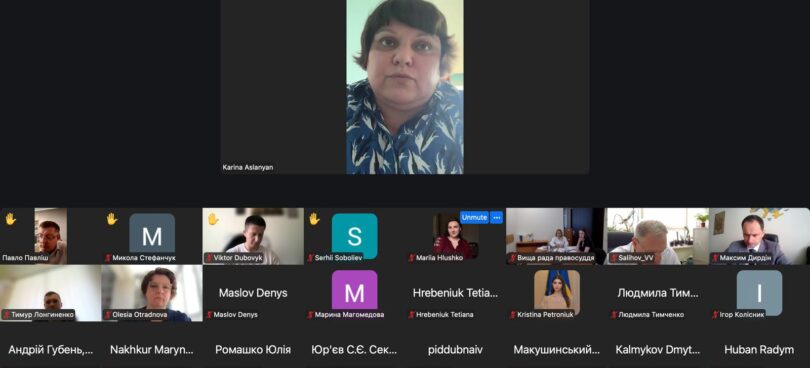
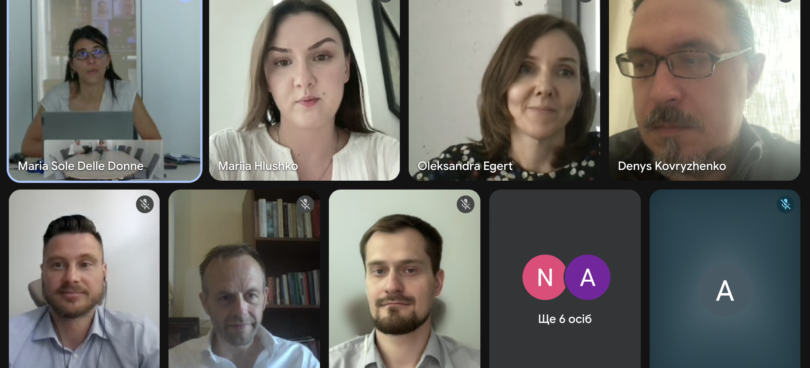
The presentation, held on 4 June, was joined by representatives of the European Commission’s Directorate-General for Enlargement and the Eastern Neighbourhood (DG ENEST), which is responsible for the negotiations on enlargement and EU accession with candidate countries and potential candidates, as well as by representatives of the EU Delegation to Ukraine.
For the third year running, the Agency for Legislative Initiatives and the coalition of civil society organisations are monitoring and assessing Ukraine’s progress in the field of European integration. This is an independent, alternative analysis by representatives of civil society and the expert community, coordinated by ALI.
Participants presented and discussed the results in the areas of the rule of law (the courts, the prosecution service and the bar), the fight against corruption and organised crime, the reform of law enforcement agencies, and the protection of fundamental human rights and freedoms. Taking part were Karyna Aslanian, Head of ALI’s Rule of Law area, and Yevhen Krapyvin, Head of ALI’s Law and Order area; Kateryna Ryzhenko, Deputy Executive Director for Legal Affairs at Transparency International Ukraine; and Tetiana Pechonchyk, Head of the Board, and Anastasiia Datsiv, Advocacy Manager for European Integration, both of the Human Rights Centre ZMINA.
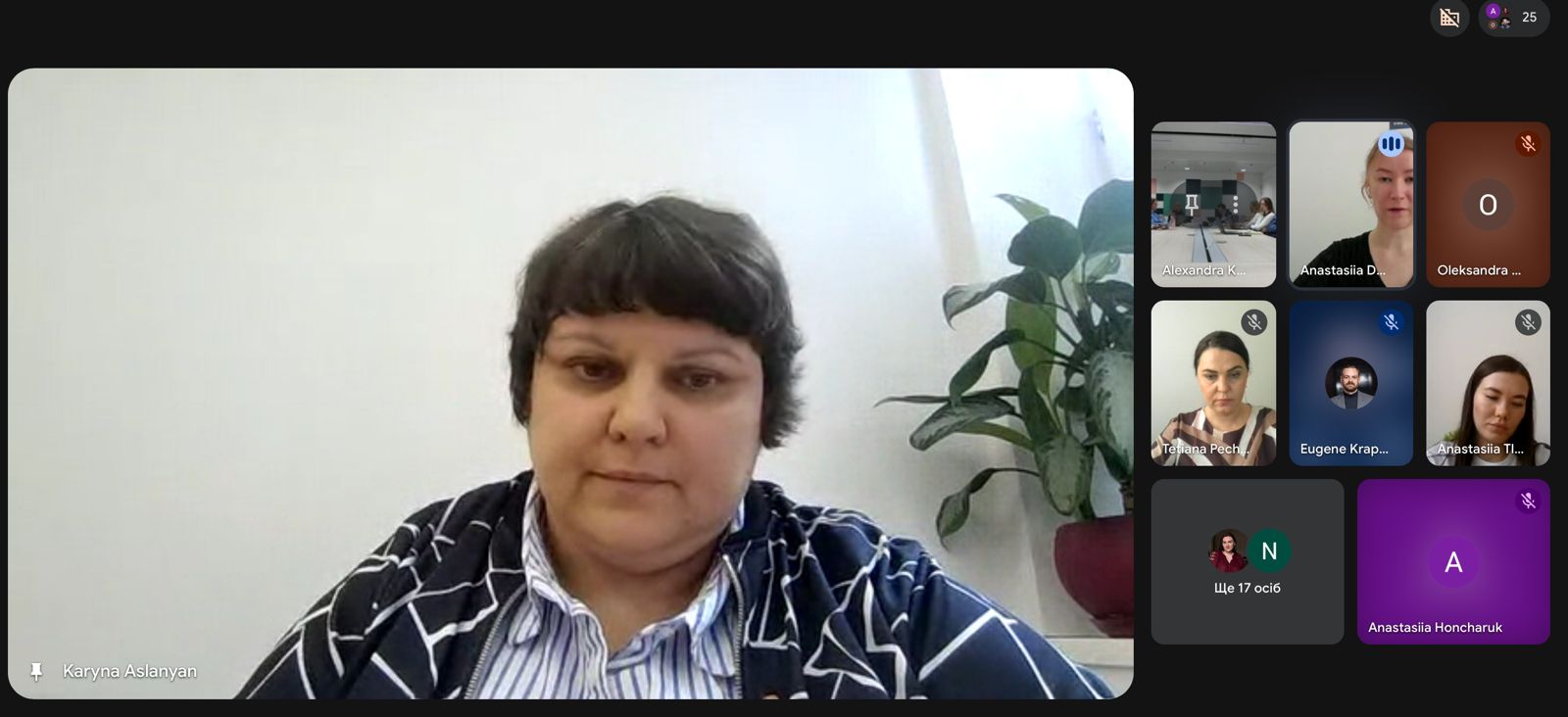
Karyna Aslanian, Head of ALI’s Rule of Law area, presented the key findings on judicial reform. The focus was on the selection of new judges and the work of the competition commissions, the improvement of disciplinary procedures, and the unresolved problems that require attention now — as well as the latest developments concerning possible cases of corruption in the Supreme Court.
An important achievement during the reporting period was the launch of a comprehensive project on the digitalisation of the judicial system, which the Agency is implementing together with key judicial institutions — the Supreme Court, the High Council of Justice (HCJ), the State Judicial Administration of Ukraine and the High Qualification Commission of Judges of Ukraine (HQCJ), as well as the Constitutional Court of Ukraine (CCU).
The key challenges at this stage are the appointment of judges to the Constitutional Court, preventing the HCJ’s work from being halted owing to legislative conflicts, and responding appropriately to possible cases of corruption in the judiciary.
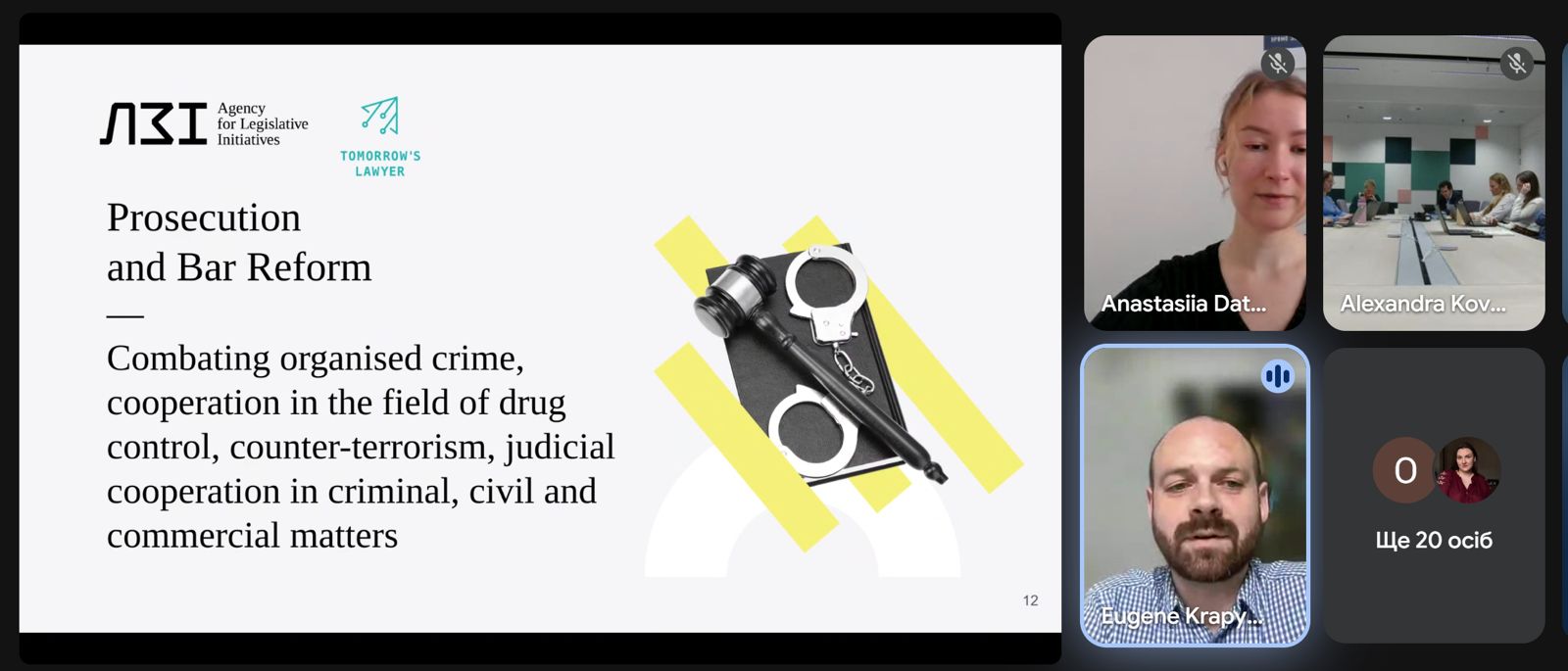
The parts of the Shadow Report concerning the prosecution service and the bar, as well as the strengthening of the institutional capacity of law enforcement agencies to counter serious crime, including organised crime, were presented by Yevhen Krapyvin, Head of ALI’s Law and Order area.
He stressed that the competitions cancelled in July 2025 have still not been resumed and that the Prosecutor General retains excessive powers. Despite the European Commission’s demand not only to restore the legislation to its previous state but also to refrain from exercising these powers, there has been no progress whatsoever. The greatest challenge for the development of the prosecution service is the 10 Kachka–Kos priorities for Ukraine for 2026. These concern, first and foremost, changing the politicised procedure for appointing and dismissing the Prosecutor General, as well as introducing a mandatory competition for senior positions. This, in particular, forms part of the drafts of the new Anti-Corruption Strategy that Ukraine is currently developing. The competition for senior positions was due to be introduced back in March 2026, but this did not happen.
Yevhen Krapyvin drew attention to the absence of any progress in reforming the bar: despite the creation in January 2026 of a governmental working group on improving the legislation in this area, only one meeting has been held since. This, together with the resistance of the Ukrainian National Bar Association, is significantly slowing the achievement of a proper outcome and of the objectives of the Rule of Law Roadmap in this area.
Yevhen Krapyvin also addressed the key aspects of the Shadow Report under Chapter 24 ‘Justice, Freedom and Security’.
This year, the experts also analysed another part of the ‘Fundamentals’ cluster — ‘Functioning of Democratic Institutions’. The coalition, coordinated by ALI, likewise shared its work in this area with the European Commission.
This year’s Shadow Report is being prepared by experts from the Agency for Legislative Initiatives, Transparency International Ukraine, the Human Rights Centre ZMINA, Tomorrow’s Lawyer, Europe without Barriers, the Ukrainian Bar Association, the Civil Network OPORA and the Centre for Democracy and Rule of Law, with the information support of European Pravda. As has now become customary, it will be published ahead of the European Commission’s report on Ukraine’s progress within the European Union’s 2026 Enlargement Package.
Background
The Shadow Report is a systematic audit by specialist experts from civil society organisations that does not duplicate the state’s official documents or the European Commission’s assessment and is not dependent on their positions. Rather, it is an analytical tool for developing a professional and comprehensive vision of the European integration processes — one that provides for the involvement of experts in the reform process — while also assessing the compliance of Ukrainian legislation and of the entire system with EU standards.
Preparing shadow reports is a regular practice in all candidate countries seeking to join the European Union. In Bosnia and Herzegovina, Serbia, North Macedonia and Moldova, independent coalitions of civil society organisations have for years carried out alternative monitoring of reform progress in the areas of the rule of law, the functioning of democratic institutions and others. In Ukraine, this work has been carried out systematically since 2024, when a coalition of civil society organisations first prepared an alternative analysis to accompany the European Commission’s report on Ukraine’s progress within the European Union’s Enlargement Package.
The Shadow Report is entirely a product of civil society, regardless of the sources of support. To strengthen the institutional independence of the process, from 2026, ALI is setting a new precedent: the Shadow Report is also funded by independent civil society organisations. A significant share of the funds for its development will be covered by the Agency for Legislative Initiatives and Transparency International Ukraine. ALI takes on the mission of ensuring the utmost impartiality and objectivity in this preparation process, as it does every year.