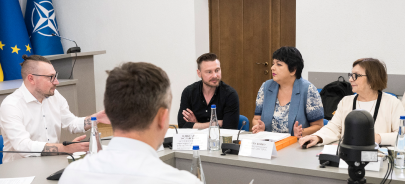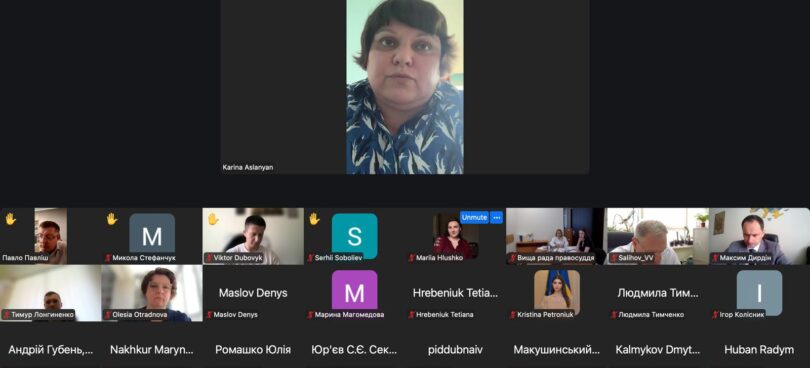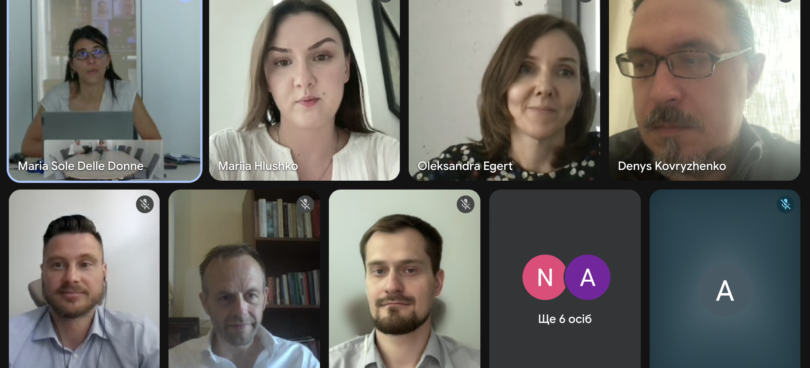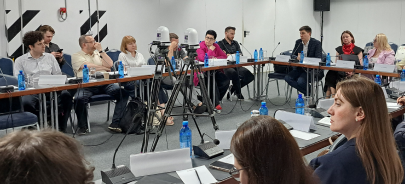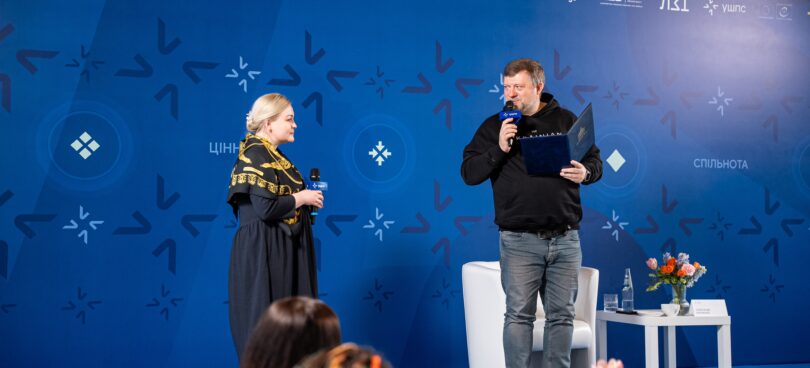
Suspending competitive selection was a necessary step for the civil service system at the start of the full-scale invasion. But what comes next amid martial law, active European integration and a growing staffing crisis? The Agency for Legislative Initiatives presented its vision in the study ‘Staffing of the Civil Service during Martial Law: Needs, Challenges and Prospects’ during a roundtable organised by the Verkhovna Rada Committee on the Organisation of State Power, Local Self-Government, Regional Development and Urban Planning. Together with MPs of Ukraine, representatives of state institutions and civil society, participants discussed:
- improving the procedure for entry into and service in the civil service;
- restoring competitions for civil service positions and service in local self-government bodies;
- proposals to the relevant Draft Law No. 13478-1, which is currently being prepared for the second reading.
International institutions emphasise that Ukraine shall return to competitive selection based on merit. Lawmakers are focused on meeting these requirements, while civil servants themselves do not always agree with these proposals. This is why the problem of staffing the civil service also needs to be viewed from within.
Oleksandr Zaslavskyi, Deputy Executive Director for Analytical Work at ALI, said that the study covers such aspects as civil servants’ internal assessment of the current system of selection for civil service positions, their needs and expectations, and possible approaches to addressing the problem of staff selection. In addition, the study contains recommendations on the legal regulation of selection for civil service positions.
The results show that civil servants have adapted to the current staffing model and have limited awareness of the potential benefits of competitive selection:
- the majority of respondents (57.2%) are satisfied with the absence of competitive procedures, while more than 55% believe that the absence of competitions fully ensures equality of access to positions;
- some respondents (26.3%) clearly understand the need for competitions and are waiting for them to be restored.
What explains these results? Factors include trust in the results of competitive selection and the uncertain status of civil servants appointed to positions without competitions. Currently, 42.8% of the civil servants surveyed believe that such persons may continue civil service without competition based on the results of performance appraisal.
A separate focus of the study is the prospect of adopting Draft Law No. 13478-1 in the near future. Civil servants’ expectations are rather cautious, but MPs note that restoring competitions is long overdue. Adoption of Draft Law No. 13478-1 on restoring competitive procedures would help fulfil one of the requirements of the Ukraine Facility Plan for 2024–2027. Restoring competitions is not only a matter of political expediency but also of evidence-based policy: what problems emerged during the period of simplified procedures, what risks are visible now and which models can work under martial law.
However, the staffing model is not the only factor shaping the professionalism, prestige and staffing stability of the civil service. Working conditions are no less important.
What model for restoring competitions would be fair, realistic and, at the same time, safe for the stability and functionality of the public administration system? It is now important to talk about the phased restoration of competitions, specific features for local self-government bodies and compliance with both Ukrainian realities and international standards.
Read more about ALI’s recommendations, stakeholders’ positions on the relevant draft law and the analysis of the current state and practice of selection for civil service positions under martial law in the new study.