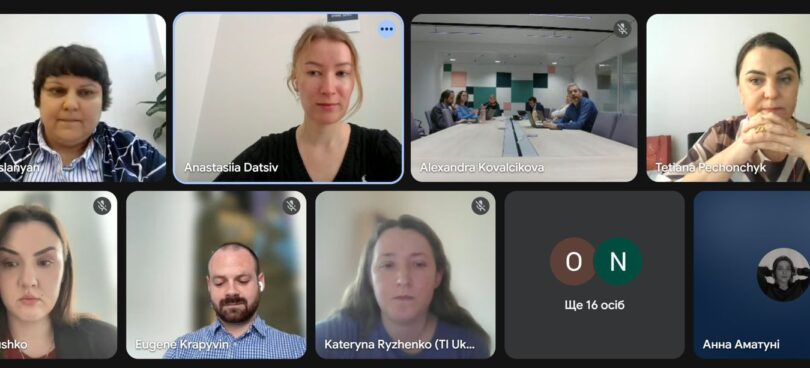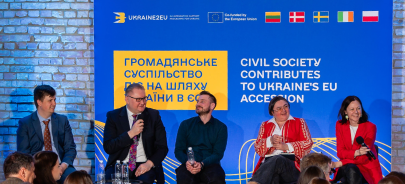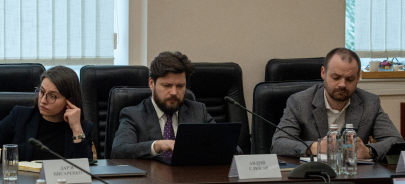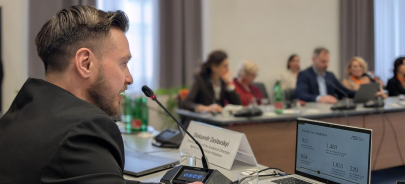
The second presentation of the interim Shadow Report: the Agency for Legislative Initiatives, together with a coalition of civil society organisations, presented the findings of its monitoring under the ‘Functioning of Democratic Institutions’ area of the ‘Fundamentals’ cluster. It covers Parliament, European integration, elections, civil society, governance and multi-level governance. The report sets out the current state of play, the progress of reforms in this area, and recommendations from experts at the organisations concerned.
Experts of the Agency for Legislative Initiatives, Civil Network OPORA and the Centre for Democracy and Rule of Law shared their work. The presentation was joined by representatives of the European Commission’s Directorate-General for Enlargement and Eastern Neighbourhood (DG ENEST), which is responsible for enlargement and EU accession negotiations with candidate countries and potential candidates.
Oleksandr Zaslavskyi, Deputy Executive Director for Analytical Work at ALI, congratulated the coalition partners and the EU representatives on the opening of the ‘Fundamentals’ cluster for Ukraine.
Under the ‘Parliament’ section, participants discussed the challenges and recommendations relating to parliamentary reform, the autonomy of the Verkhovna Rada, the legislative process and related matters. The expert noted that, since the start of the full-scale invasion, the Verkhovna Rada has remained functional and legitimate, and that during the first session under martial law parliamentarians passed 258 laws — the largest number of laws adopted in a single session in the history of the Ukrainian parliament.
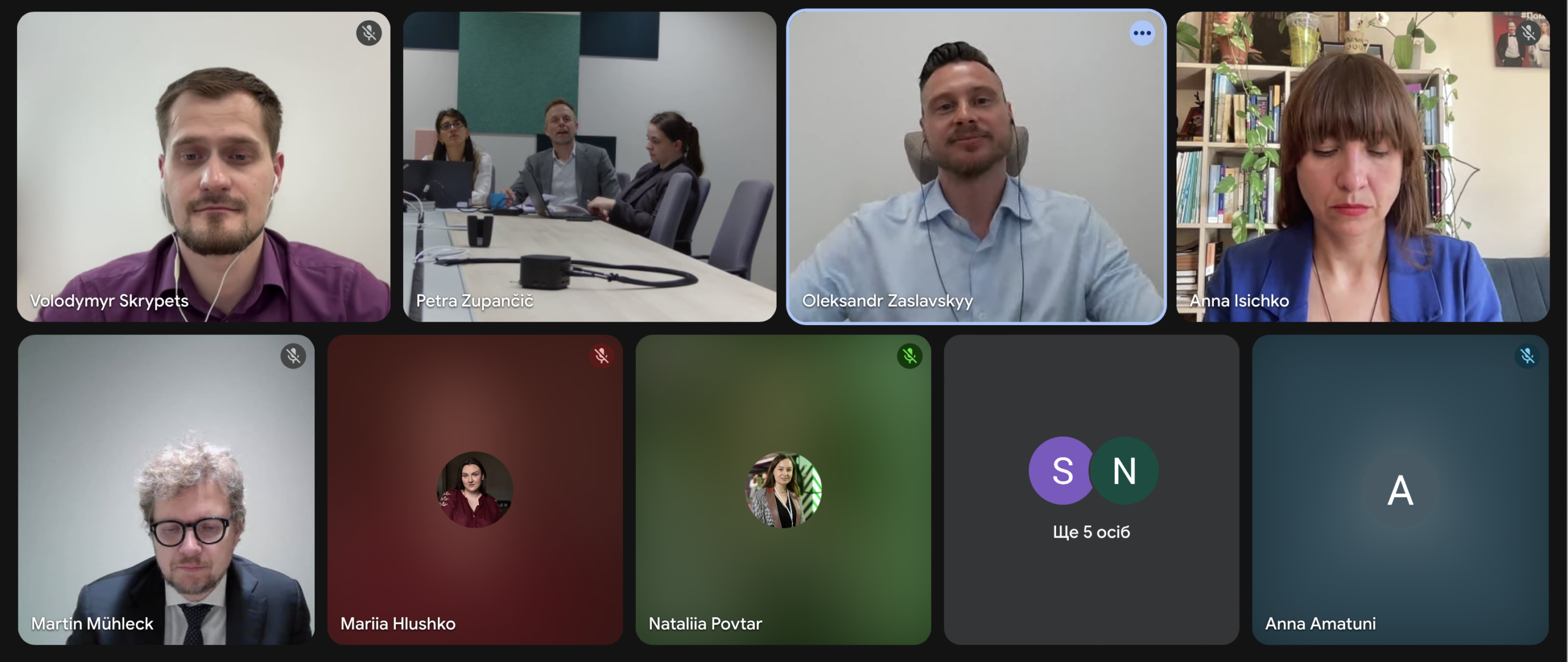
The presentation also addressed Ukraine’s progress on the European integration track, in particular the planning and development of law-making, policy implementation, and the monitoring of the changes introduced.
One of the significant achievements in this area has been the approval of the National Programme for the Adaptation of Ukrainian Legislation to European Union Law. It is now important to enshrine in law the status and binding nature of the National Programme, and to align it with the Verkhovna Rada’s legislative work plan.
During the presentation of the ‘Governance’ section, Oleksandr Zaslavskyi described the current situation — namely the structural and staffing changes in the Ukrainian Government, the challenges in its interaction with the Verkhovna Rada, and the planning of government activity, particularly with regard to fulfilling international commitments.
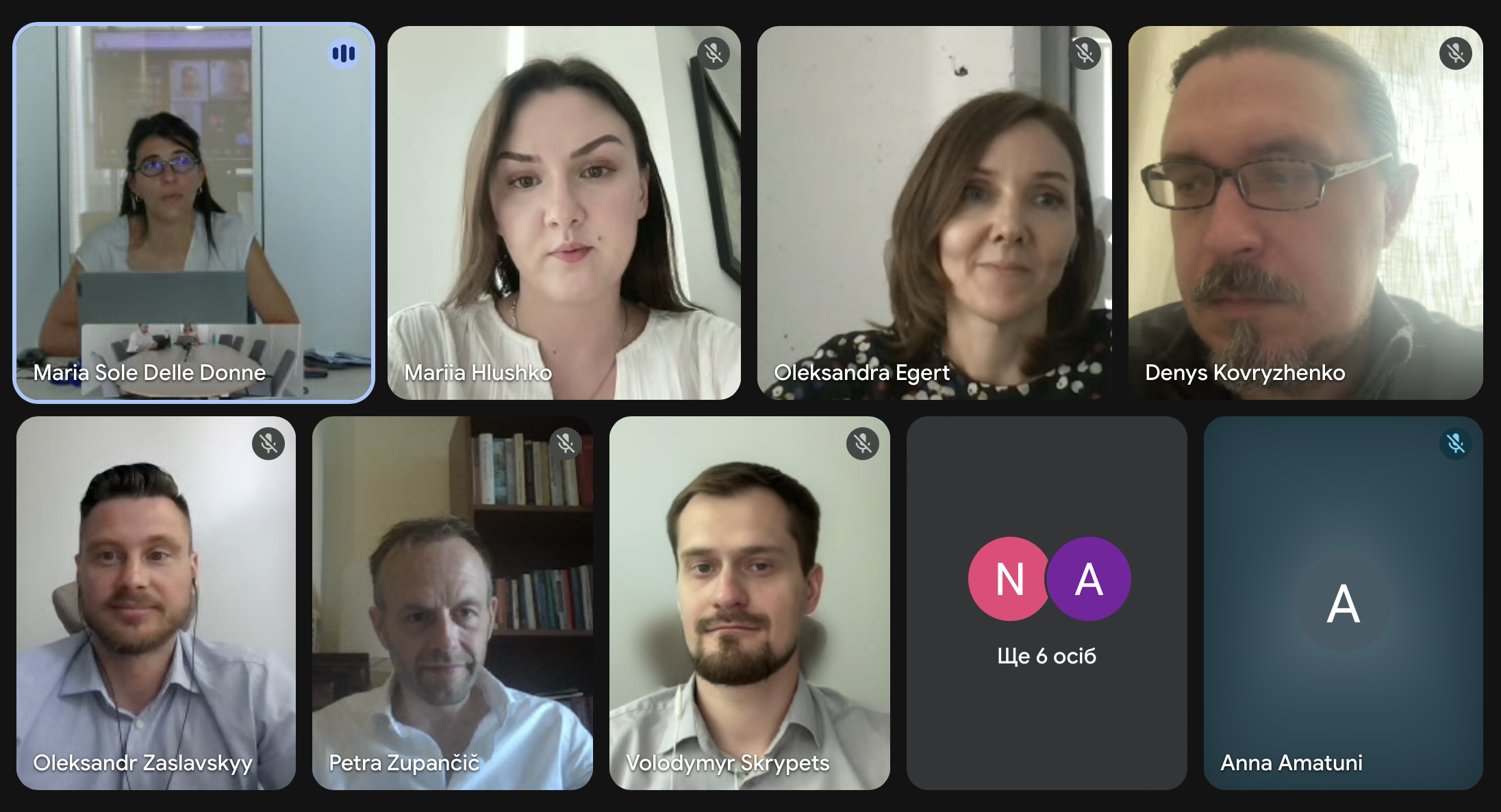
On multi-level governance, Volodymyr Skrypets noted that the European integration processes are continuing in this area too: in December 2025 the Government adopted Resolution No. 1748, ‘Certain Issues of Reforming Local Self-Government and the Territorial Organisation of Power under Martial Law and in Preparation for Ukraine’s Accession to the European Union’. However, under conditions of full-scale war, the problems that come to the fore are those linked to the depopulation of Ukrainian communities, the falling number of local council deputies, and the attraction of investment at the local level, including the implementation of the State Strategy for Regional Development.
As a reminder, the Agency for Legislative Initiatives, together with a coalition of civil society organisations, previously presented to the European Commission the interim findings of this year’s Shadow Report under Chapter 23 ‘Judiciary and Fundamental Rights’ and Chapter 24 ‘Justice, Freedom and Security’.
For the third year running, the coalition of civil society organisations coordinated by ALI has been monitoring and assessing Ukraine’s progress on European integration. This is an independent, alternative analysis by representatives of civil society and the expert community, coordinated by ALI. The coalition comprises experts from the Agency for Legislative Initiatives, Transparency International Ukraine, the Human Rights Centre ZMINA, Tomorrow’s Lawyer, Europe without Barriers, the Ukrainian Bar Association, Civil Network OPORA and the Centre for Democracy and Rule of Law, with media support from European Pravda.
As has become customary, the new Shadow Report will be published ahead of the European Commission’s report on Ukraine’s progress within the European Union Enlargement Package in 2026.
Background
The Shadow Report is a systematic audit by sector experts from civil society organisations. It does not duplicate the state’s official documents or the European Commission’s assessments and is not dependent on their positions. Rather, it is an analytical tool for developing a professional and comprehensive understanding of European integration processes, one that involves experts in the reform process. At the same time, it assesses how far Ukrainian legislation and the system as a whole conform to EU standards.
Producing shadow reports is a regular practice for all candidate countries seeking to join the European Union. In Bosnia and Herzegovina, Serbia, North Macedonia and Moldova, independent coalitions of civil society organisations have for years carried out alternative monitoring of reform progress in areas such as the rule of law and the functioning of democratic institutions. In Ukraine, this work has been carried out systematically since 2024, when a coalition of civil society organisations first prepared an alternative analysis to accompany the European Commission’s report on Ukraine’s progress within the European Union Enlargement Package.
The Shadow Report is entirely a product of civil society, regardless of its sources of support. To strengthen the institutional independence of the process, from 2026 ALI is establishing a new trend: the Shadow Report is also financed by independent civil society organisations. A significant share of the funding for its development will be covered by the Agency for Legislative Initiatives and Transparency International Ukraine. ALI takes on the mission of ensuring the maximum impartiality and objectivity of this preparation process, as it does every year.