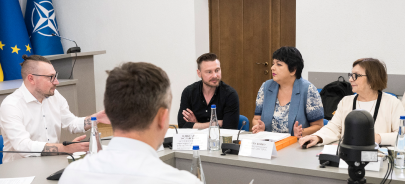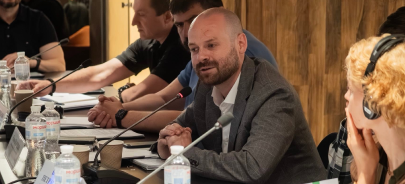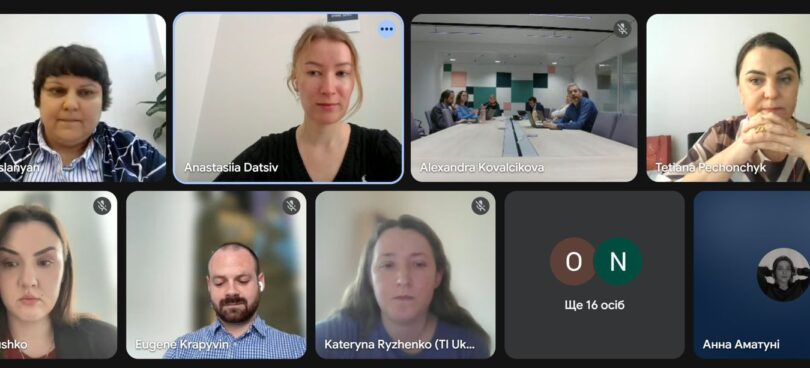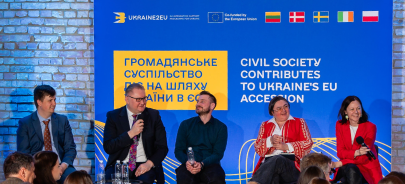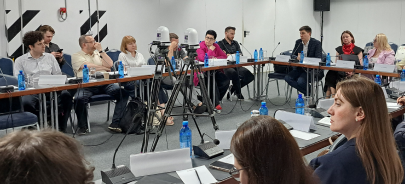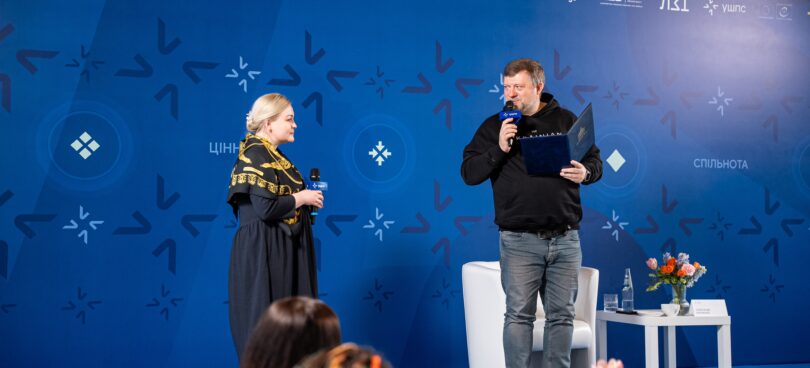

On October 26-29, Lviv hosted the Third National Session of the XII Program of the Ukrainian School of Political Studies.
Rules for building democracy in the XXI century and why they do not work in Ukraine

Do the objective laws of nature and human development have an impact on the state as a complex social system? What are socioeconomic and political conditions necessary to build a functioning democracy in the country? What are the role of the army in democracy? What is the role of civil society and the level of the political culture of a voter in democracy as a feedback system to achieve the goal of public administration: to ensure freedoms, rights and high standards of living for ordinary citizens in the country? – these are the issues discussed with the School participants by Ihor SMESHKO, Head of the NGO Strength and Honor, former Head of the Security Service of Ukraine (2003-2005).
Local development as a driver of transformation in the country

Discussion of the participants of the Ukrainian School of Political Studies on local development as a driver of transformations in the country with Andriy SADOVYI, Lviv Mayor.
Morality of the political process

People tend to believe that politics and morality are incompatible each other. This tradition dates back to Machiavelli. The polar opposite position is that of Kant: people in their behavior must be guided by moral motives rather than practical needs (moral imperative). Not every successful policy is highly moral, but any immoral policy is devastating. Ukrainian realities provide a lot of illustrations of the devastating effects of immoral power. Is moral politics possible in Ukraine? Can politics be moral? Should we talk about a moral movement? – these are the topics raised by Myroslav MARYNOVYCH, Vice-Rector for University Mission, Ukrainian Catholic University, in his conversation with the School participants.
Ukraine: unfinished revolution and transition to the third Ukrainian Republic

The Maidan of 2013-2014 was aimed at an anti-oligarchic revolution – a leap from an oligarchic state with limited access to a democratic state with wide access. What was the purpose of the Maidan of Dignity of 2013-2014? What is happening in Ukraine – a social revolution, civil war as a war of the middle class against Ukrainian oligarchs, or Putin’s aggression? – Taras VOZNIAK, Editor-in-Chief of the Ї journal discussed these issues with the participants of the Ukrainian School of Political Studies.
Myths about the Ukrainian liberation movement of the twentieth century

What was and what was not the Ukrainian liberation movement of the twentieth century? Who were its heroes? Why was it mythologized? Why is its legacy attracting so much attention today? – the School participants talked over these topics with Ruslan ZABILY, Director of the National Memorial Museum of Victims of the Occupation Regimes ‘Prison at Łąckiego Street’ (Tyurma na Lontskoho) in Lviv.
Gender equality in political and public life

We live in the 21st century when women and men in Ukraine’s democratic society enjoy equal rights and opportunities, equal access to political life, equal pay and professions of their choice. Is this myth or reality in modern Ukraine? Empirical tendencies manifest deepening differences between women and men who enjoy the same rights de jure and de facto. What progress has been made and what are the ongoing challenges in the context of achieving gender equality in Ukraine? – the School participants had a chance to discuss these issues with Kateryna RYABIKO, Project Coordinator, OSCE Office for Democratic Institutions and Human Rights (OSCE/ODIHR).
Political corruption and transparency of funding of political parties
Money in politics is a necessary component of any democratic process that helps express political support, political participation, and actively compete in elections. At the same time, political funding also bears specific risks for any democratic and economic system. What are the issues at the crossroads of funding rules for political parties, public procurement procedures, role of politically aware persons and declaration of assets and revenues of political and civil servants? What measures do relevant authorities undertake to combat corruption in these areas and what mechanisms can be used to facilitate these efforts? – Dr. Marcin Walecki, Head of the Democratization Department, OSCE Office for Democratic Institutions and Human Rights (OSCE/ODIHR), discussed these topics with the members of the Ukrainian School of Political Studies.
Political parties

How should modern parties function? What is a modern election campaign like in the era of social media? What can we learn from the latest elections in the East and West? Is there a chance to create large-scale parties or are niche parties the thing of the future? What awaits Ukraine with politics again dominated by oligarchs? How can one organize an ideal campaign? – the School participants reflected on these questions with Jacques MONACSH, a former MP of the Kingdom of the Netherlands, an associate partner of the consulting company GKSV.
UlianaCare

Uliana Suprun, Acting Minister of Healthcare, is the 21st head of this sector (since September 2016), who, for the first time since independence, has made attempts at radical change (ULIANACARE). Why do significant changes seem to be possible for the first time now? What is the current healthcare system in Ukraine like in terms of who and when pays for it and what he receives in return? What are the risks associated with the positions held by the parties to the conflict? Is there a “white book” on the development of the healthcare system in Ukraine? What is better: 5 years of change and mistakes or 50 years of “stability” and sabotage? Is there a separate “Ukrainian” way as regards the healthcare system in Ukraine? How can we make up our mind concerning which side to take? As a matter of fact, are there only two irreconcilable opposing sides? What do we lack to make an informed choice? – the participants of the Ukrainian School of Political Studies discussed these subjects with Oleh PETRENKO, Deputy Director General for Strategic Development of the ISIDA Clinic, USPS alumnus.
Can Ukraine have an economy of $ 1 trillion in 2030?

What is the current state of Ukrainian economy? What is the position of Ukraine on the global economic map? Do we have a potential for development? What are the conditions for reaching an economy of $ 1 trillion and what are the consequences for the public? – the School participants discussed these questions with Anatoliy AMELIN, Director of Economic Programs of the Ukrainian Institute of the Future, USPS alumnus.